
This article on EdTech and AI pulls together a wealth of practical classroom tips, teacher insights and pointers to relevant research, all intended to help you use technology in your classroom with confidence and purpose.
In today’s classrooms, education technology is a significant presence, helping with student engagement, assessment and instruction. And the nature of technology is that it never stops moving, meaning that teachers and students are now navigating EdTech, plus the rapid advances in AI, all while the world is still working out what this means for the future.
While EdTech and AI tools offer schools excellent opportunities to personalise learning and streamline administrative tasks, they also create challenges – from providing a safe online environment and safeguarding student data to avoiding cognitive offloading, preserving critical thinking, promoting creativity and encouraging authenticity.
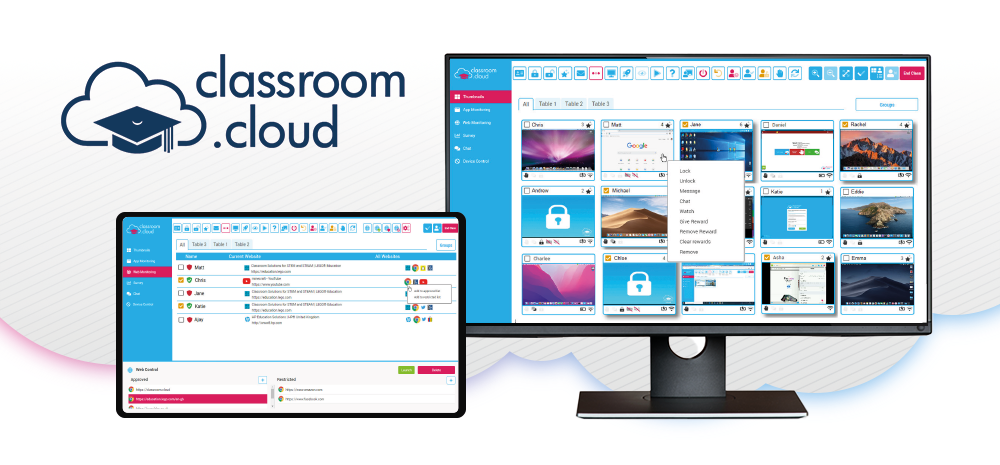
classroom.cloud is EdTech that holds the ISTE Seal for pedagogical alignment.
AI tools
AI tools are reshaping how teachers approach lesson planning, resource creation and school admin. It has fast become an indispensable “thinking partner” that helps educators work smarter and enables them to create differentiated learning materials at scale.
Saving time with AI
For many educators, the initial entry point into AI is the pull of its time-saving nature. And yes, it’s a huge help for those repetitive routine tasks!
By using tools like ChatGPT, teachers can quickly draft lesson plans and resources, generate custom reading passages tailored to specific reading ages or produce varied question sets for formative assessment. It opens up a wealth of resource possibilities that would previously have taken many hours to create.
If you are new to the concept of using AI in your teaching role, be sure to explore our practical article on Getting started with AI to learn about the considerations you should think about before plunging into using it at school.
And if you’re wondering about using AI with your students, read about some of the research about companion learning AI tools and whether they are a leveller for every individual.
Teachers at the centre
The most effective EdTech integration keeps the teacher at the centre of learning decisions.
AI tools may excel at generating text and structuring learning resources, but human expertise is required to provide context and explanation, support emotional learning and development, and guide classroom discussions. Despite what you may see or hear in the media, there’s no danger of AI ousting human educators; in fact, students really value the connection to their teacher, as this research from Oxford University Press revealed.
Teacher perspectives: Here, you can read a personal account of how AI assists with marking, scaffolding and optimising workflow across different key stages – and see how the technology was first received by students in a Nigerian school.
Professional skills come first
This approach ensures that pedagogy leads teachers’ use of technology.
Professional skills are key. Teachers know their students – their emotional states and capabilities, as well as the classroom dynamics. Technology simply cannot do this, which means the teacher will always be at the centre of learning. The two can successfully co-exist though – and you can read about maintaining the balance in this teacher’s personal thoughts on human-mediated AI in classrooms.
Building staff confidence with EdTech is also vital – and it’s just the first hurdle! Successfully implementing AI can seem like a leap into the unknown. But, like all change, it simply requires conquering the anxiety first before you move forward into experimenting with it. Read these report insights on why confidence is key to AI in schools to help build a supportive culture amongst staff at your school.
Once teaching skills have become second nature, it seems that experienced educators are often best positioned to critique and refine AI-generated outputs. You can explore more about how this works in this account of why experienced teachers make the best AI adventurers.
Checking AI’s homework
You’ll have no doubt heard the phrase ‘human in the loop’. This is a critical stage of AI use – not just to check for quality (and that it created what you asked for), but to prevent any hallucinations or false information from proliferating. After all, no teacher wants to tell students to ‘unlearn’ what an AI-prepared worksheet has told them.
AI – and other technology – can be tremendously useful in a teacher’s role, but remember that, whatever tech you use, the checking stage is vital to maintain the high quality that’s needed in education. Therefore, teachers must remain the final overseers and decision-makers in the classroom – it should never be left to an AI tool.
Digital Literacy
Learning about digital citizenship and media literacy is critical for today’s students. There is a great deal to get to grips with, so it’s never too early to begin and build digital resilience along the way.
AI in schools has piled on even more considerations, such as student data privacy, academic integrity, intellectual property and critical digital literacy. It’s no wonder that with increasing layers of considerations needed around EdTech and AI in classrooms, many educators can feel overwhelmed.
Refreshing safeguarding and data policies
With technology that develops at a rate of knots (and that’s so true of AI right now), schools must continually update their policies and guidance to reflect how student information and work are handled by automated platforms.
Breaking this down into manageable steps helps to get these kinds of tasks finished. You could start with these four practical steps to refresh your school AI policy – and explore this advice from a safeguarding expert who outlines five ways to ensure you have essential digital safety measures in place in your school.
Embedding AI literacy in the curriculum
What impact will AI have on students’ future lives? It’s the question nobody quite knows how to answer.
But one thing’s for sure: bolting it onto an already-outdated curriculum is going to run into trouble sooner rather than later. It’s clear that the focus needs to shift to areas such as interaction, collaboration and identity.
Students need to develop analytical, imaginative, and critical skills to evaluate automated outputs, assess bias, and navigate an AI-augmented landscape. And they want to know how to do that. They’re thinking carefully about AI and they want their teachers to know how to guide them as they use it.
Action steps for your school
- Check your EdTech solutions. Review your current software platforms to ensure they continue to align with school policies on pedagogy, data compliance and safeguarding requirements. Technology changes fast and it’s all too easy to overlook this.
- Update Acceptable Use Policies. Ensure your staff and student guidelines now cover topics such as AI tools, intellectual property and ethical use. This becomes more important by the day.
- Don’t forget the training. Teaching without EdTech and AI is not an option. So, build staff confidence by offering subject-specific professional development where possible and sharing practical classroom examples so colleagues can see their potential uses.


